Mohammed bin Salman Net Worth: What We Know About His Wealth Today
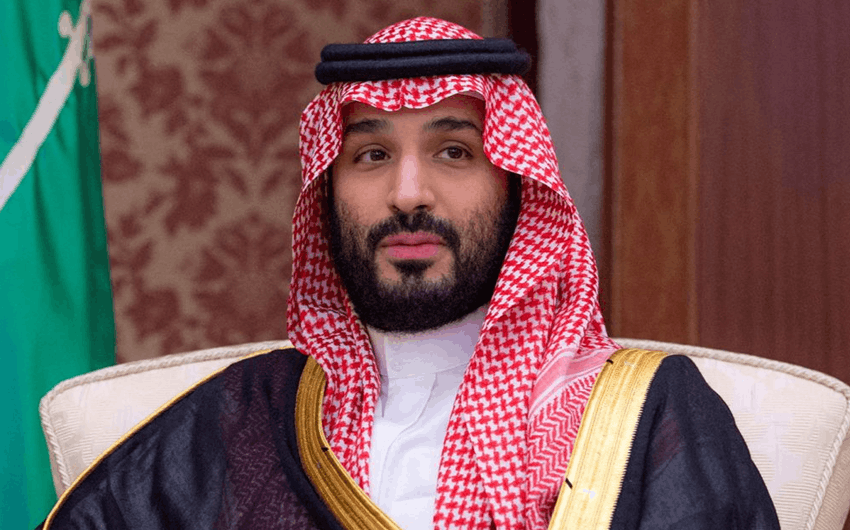
Mohammed bin Salman net worth is often discussed because his role blends personal privilege, royal-family assets, and state-backed economic power in a way few leaders can match. The simplest answer is that widely cited estimates place his personal wealth in the tens of billions of dollars, commonly around $25 billion, even though the true figure is hard to pin down from public records. What’s clearer is how that wealth is built: elite access to capital, high-value holdings, and influence over investment engines that reshape Saudi Arabia’s economy.
Quick Facts
- Full name: Mohammed bin Salman bin Abdulaziz Al Saud
- Common name: Mohammed bin Salman (MBS)
- Born: August 31, 1985
- Age: 40 (as of February 2026)
- Height: About 6’0” (1.83 m)
- Nationality: Saudi Arabian
- Title/role: Crown Prince of Saudi Arabia; Prime Minister (since September 27, 2022)
- Known for: Vision 2030, economic diversification, major investment strategy, social reforms
- Education: Bachelor’s degree in law (King Saud University)
- Spouse: Princess Sara bint Mashour Al Saud
- Children: Five
- Estimated net worth: Approximately $20–$25 billion (commonly cited around $25 billion)
Short Bio: Mohammed bin Salman
Mohammed bin Salman is Saudi Arabia’s crown prince and the country’s prime minister, widely seen as the kingdom’s central decision-maker. He rose quickly through senior roles, became crown prince in 2017, and has driven an aggressive modernization agenda under Vision 2030. His public identity is tied to large-scale economic transformation, headline-making investment moves, and a leadership style that concentrates power and accelerates change.
Short Bio: Princess Sara bint Mashour Al Saud
Princess Sara bint Mashour Al Saud is a member of the Saudi royal family and the wife of Mohammed bin Salman. They married in 2008 and have five children. She is rarely in the public spotlight compared to many global political spouses, and most public details about her focus on family background and her role within the royal household.
So, What Is Mohammed bin Salman’s Net Worth?
Most public estimates place Mohammed bin Salman’s personal net worth in the tens of billions, with $25 billion frequently cited as a headline figure. It’s best to think of that number as a practical “market-style estimate,” not a fully audited total. Unlike CEOs of publicly traded companies, royals and senior state leaders don’t typically publish detailed personal financial statements, and many assets may be held through layered structures or family-linked entities.
That said, estimates are not pulled from thin air. They’re usually built by looking at:
- High-value properties and luxury purchases tied to him in major reporting over the years
- Royal family wealth mechanisms and access to capital
- Reported private holdings and stakes connected to royal circles
- The difference between personal wealth and the state-linked investment power he oversees
Personal Wealth vs. State Wealth: The Biggest Source of Confusion
One reason the conversation around his net worth gets messy is that Mohammed bin Salman sits at the intersection of two worlds:
- Personal wealth: Assets he can reasonably be considered to own or control privately.
- State wealth and national investment power: Assets owned by the Saudi state or managed through sovereign institutions.
Saudi Arabia’s sovereign wealth activity—especially through the Public Investment Fund (PIF)—is enormous. Mohammed bin Salman chairs PIF’s board and influences its direction, but PIF’s assets are not his personal bank account. A helpful way to picture it is this: personal net worth is what an individual owns; sovereign funds are national tools, even when a leader has major influence over them.
Where His Personal Money Likely Comes From
1) Royal family position and access to capital
As crown prince, Mohammed bin Salman is positioned at the top tier of one of the world’s wealthiest royal families. That status can include access to private family holdings, income streams, and opportunities that are not available to ordinary investors. In royal systems, wealth may be distributed through family structures, trusts, and legacy assets, and it can be hard for outsiders to separate one individual’s slice from the larger family pie.
While outside estimates vary, the big takeaway is simple: being crown prince gives him exceptional access—to capital, to deals, to advisors, and to assets that can appreciate dramatically over time.
2) High-value assets linked to his name
A portion of Mohammed bin Salman’s “net worth story” is rooted in the kinds of luxury assets that often show up in major coverage—things like:
- Iconic real estate: Ultra-premium properties can store value and signal status, especially when purchased as trophy assets.
- Luxury transport: High-end yachts and similar assets are expensive, but they also function as mobile, elite spaces that few people on earth can access.
- Fine art: Art purchases can serve as both prestige symbols and investment assets, though their resale value depends on the market.
These categories matter because they are “visible” in a world where much else is private. When journalists track purchases and link them to a buyer, those purchases become anchor points for wealth estimates.
3) Private investments and stakes connected to royal circles
Another likely component is investment activity through private channels—stakes in businesses, real estate projects, or holding companies. In many wealthy families, ownership is not always in one person’s name in a simple way. It can be spread across entities, partners, or structures designed for privacy and long-term control.
This doesn’t automatically mean the assets are hidden for wrongdoing—it often reflects how ultra-wealth is managed globally. But it does mean the public typically sees only a fraction of what exists.
The Role of PIF and Why It Matters to His Wealth Narrative
Even though PIF assets are not personal assets, the scale of PIF helps explain why Mohammed bin Salman is associated with massive wealth in the public imagination. PIF has grown into one of the world’s most influential sovereign investment groups, with investments spanning domestic mega-projects and global stakes across industries.
His chairmanship matters for two reasons:
- Influence: He can steer national investment priorities, which reshapes entire sectors and creates long-term economic leverage.
- Access and proximity: Being at the center of a huge investment engine places him near deal flow, top global investors, and strategic opportunities.
So even if PIF’s balance sheet is not “his net worth,” it amplifies his economic footprint and helps explain why his personal wealth is often assumed to be extraordinary.
How Net Worth Estimates Are Usually Built for Someone Like MBS
For public business figures, net worth calculations can be straightforward: shares owned times stock price, plus known properties, minus known debts. For a royal leader, it becomes more of a puzzle. Analysts and publications usually rely on a mix of:
- Reported major purchases (real estate, art, yachts)
- Likely private holdings inferred from status and access
- Historical reporting that ties specific assets or transactions to the individual
- Reasonable market valuation of assets that can be priced (property, comparable luxury holdings)
The end result is often an estimate that aims to be realistic without pretending the public has a complete balance sheet. That’s why you’ll see a commonly cited “main number” (often around $25 billion) used as a workable figure for discussion.
What His Spending Signals About Wealth
Ultra-high-net-worth individuals often reveal their wealth through behavior more than statements. When someone repeatedly participates in purchases that run into the hundreds of millions, it suggests access to capital at an extremely high level.
It’s also important to understand that “spending” at this tier is not always like ordinary spending. Many purchases can be financed, structured, or held through entities that turn a headline acquisition into a managed asset. To the public, it looks like one gigantic payment. In practice, the financial structure can be far more complex.
Power, Position, and the “Control Premium” Effect
There’s a concept in finance that helps explain why people associate Mohammed bin Salman with huge wealth: a control premium. In business, control is valuable because it can shape outcomes. In a country, the ability to direct national strategy—especially investment strategy—creates a form of economic power that looks like wealth even when it isn’t privately owned.
That’s one reason why discussions about Mohammed bin Salman net worth often blend personal assets with the broader economic influence he holds. The influence is real. The personal balance sheet is harder to verify.
A Practical Summary of His Net Worth Story
If you want a grounded way to think about it, here’s the simplest framework:
- Personal net worth: Most often estimated around $20–$25 billion, with $25 billion commonly cited.
- Visible asset signals: High-profile luxury purchases and trophy assets support the idea of enormous personal wealth.
- Family and system context: Royal family structures and elite access can blur what is “personal” versus “family” wealth.
- National investment influence: His role steering major institutions increases his economic footprint, even though those assets are not personally owned.
In other words, the popular estimate isn’t just a random internet number—it’s a shorthand attempt to quantify a very uncommon mix of privilege, assets, and influence.
Conclusion
Mohammed bin Salman’s wealth is best described as massive, influential, and partly opaque—with public estimates commonly landing around $25 billion for his personal net worth. The bigger story, though, is how closely his financial narrative is tied to Saudi Arabia’s transformation drive. Whether you view him primarily as a political leader, an economic architect, or both, his money story will keep drawing attention because it sits at the center of power, ambition, and long-term national strategy.
image source: https://edition.cnn.com/2023/09/21/middleeast/saudi-arabia-mbs-interview-fox-intl